Charles Bukowski was an alcoholic, a womanizer, a chronic gambler, a deadbeat, and on his worst days, a poet.
He is the last person you would expect in a book about self-improvement.
Which makes him the perfect place to start.
For decades, Bukowski wanted to be a writer. For decades, the world rejected him. He filed letters at a post office by day and drank alone by night, hammering out poetry until he passed out on the floor.
He was a loser. He knew it. And he accepted it.
Then, at fifty, a small publisher offered him a chance. He quit his job and wrote his first novel in three weeks.
He went on to sell millions of books.
The cultural narrative says this is a story of persistence. A man who never gave up.
But that’s wrong. The epitaph on Bukowski’s tombstone doesn't say "Persistence" or "Believe." It reads:
Don’t try.
Bukowski succeeded not by trying to be a winner, but by accepting he was a loser and writing honestly about it. This is Mark Manson's counterintuitive premise:
The desire for more positive experience is itself a negative experience. And, paradoxically, the acceptance of one’s negative experience is itself a positive experience.
We live in a culture that is obsessively focused on unrealistically positive expectations.
Be happier.
Be healthier.
Be the best.
Be richer, sexier, more popular, more productive.
But this fixation on the positive, on what’s better, what’s superior, only serves to remind us, over and over again, of what we lack.
You get anxious about your job. Then you get anxious about being anxious.
This is the Feedback Loop from Hell.
This longform unpacks Manson's framework for escaping that loop.
By the end, you will discover:
- Why trying to be happy makes you miserable.
- Why you're not special, and why that's liberating.
- The five values that replace the pursuit of happiness with the pursuit of meaning.
The 1-Minute Summary
A happy life is a life with good problems.
Happiness is not an equation to be solved. It is an activity. It comes from the struggle itself. And because you only have so many fucks to give, you must spend them wisely.
Manson proposes five counterintuitive values:
- Radical Responsibility: Accept responsibility for everything in your life, regardless of fault.
- Uncertainty: Stay humble. Doubt your own beliefs so you can grow.
- Failure: Seek out your flaws so you can fix them.
- Rejection: Learn to say and hear "no." Boundaries define identity.
- Mortality: Contemplate death. It keeps all other values in perspective.
To live well, care about the right things.
Module 1
The Counterintuitive Truth
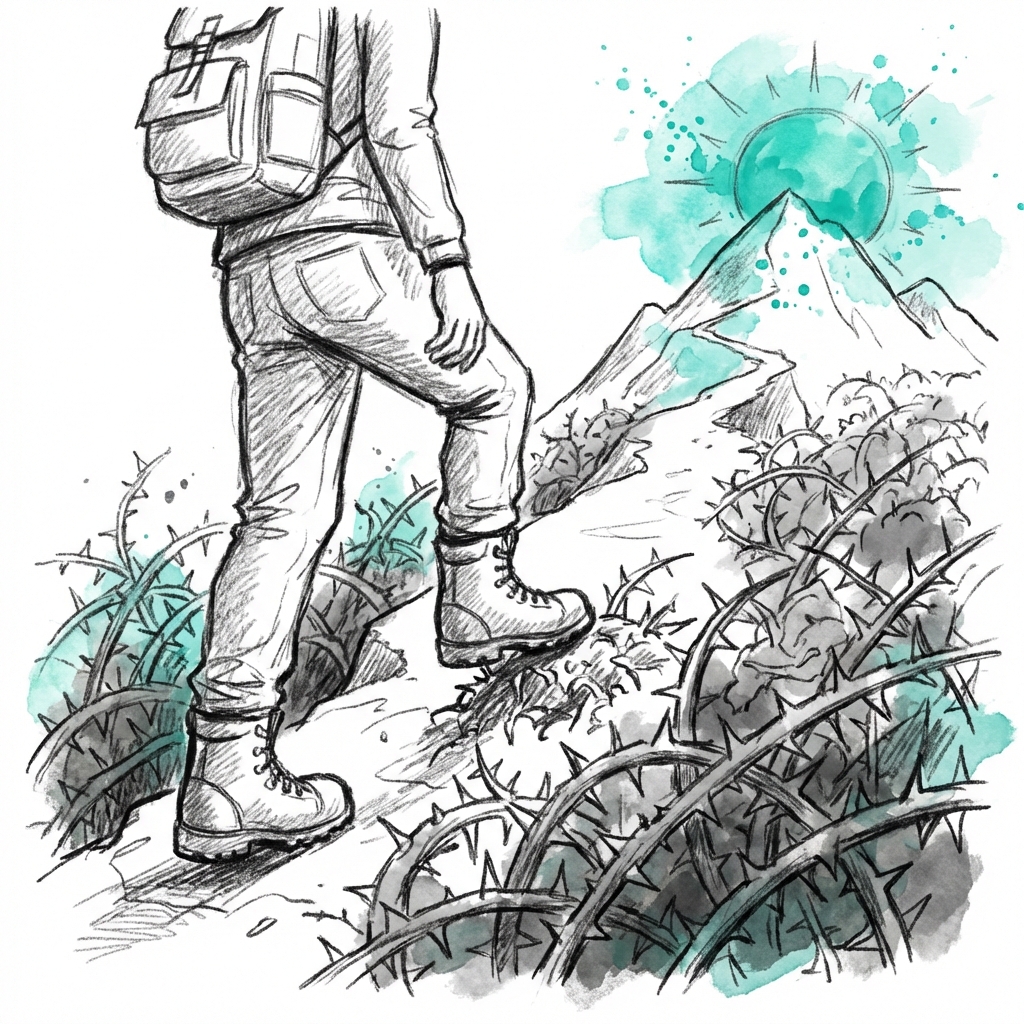
There is an insidious quirk to your brain that, if you let it, will drive you batty.
It goes something like this:
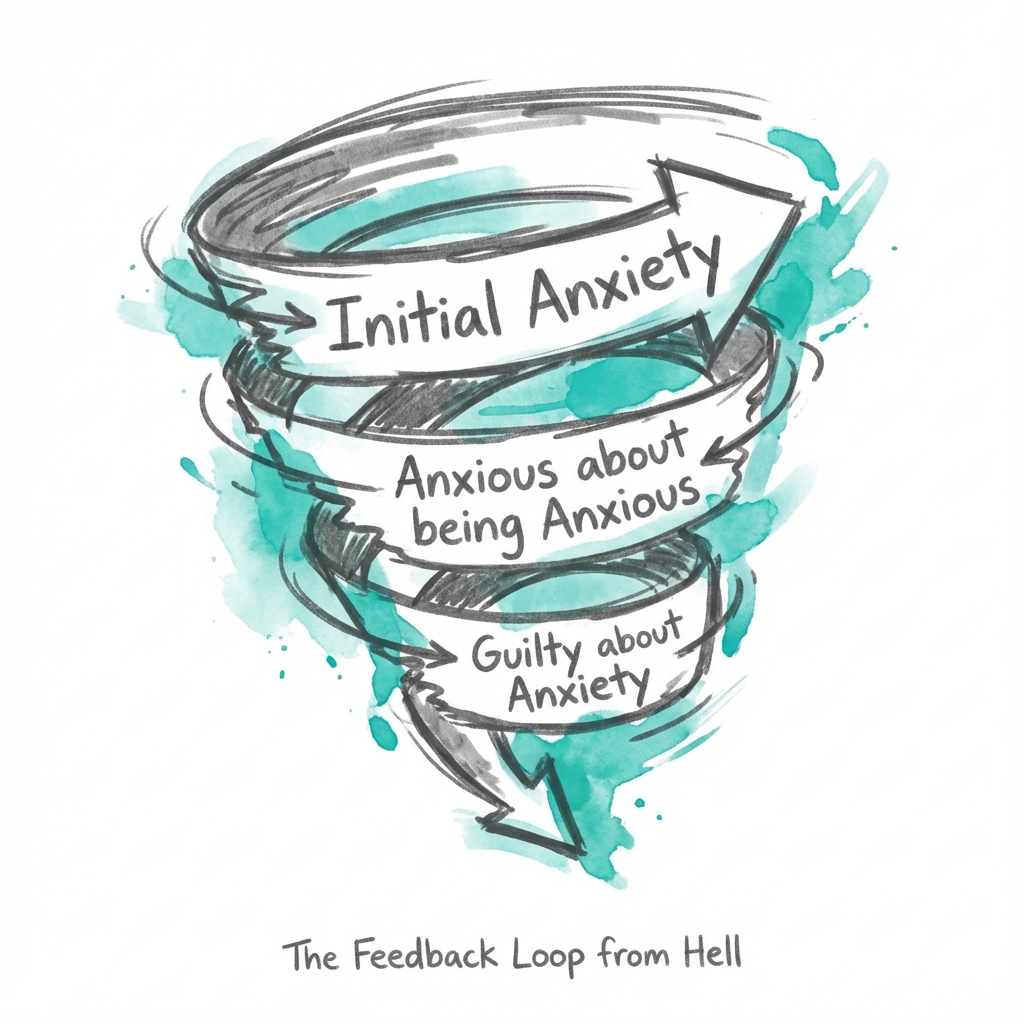
You get anxious about confronting someone in your life. That anxiety cripples you, and you start wondering why you’re so anxious.
Now you’re becoming anxious about being anxious.
You’re worried about your worrying. You feel guilty about your guilt. You get angry that you’re getting angry.
Welcome to the Feedback Loop from Hell.
The Comparison Trap
In the past, if your grandfather felt like crap, he’d probably just think:
"Gee whiz, I sure do feel like a cow turd today. But hey, I guess that’s just life. Back to shoveling hay."
But today?
Now if you feel like shit for even five minutes, you’re bombarded with 350 images on social media of people who are totally happy, having amazing lives, and probably pooping gold nuggets.
You see this and think, "What is wrong with me?"
We have become a society that believes negative experiences (anxiety, fear, guilt) are not okay.
We feel bad about feeling bad.
By not giving a fuck that you feel bad, you short-circuit the Feedback Loop from Hell. You say to yourself, "I feel like shit, but who gives a fuck?"
And suddenly, you stop hating yourself for feeling so bad.
The Backwards Law
The philosopher Alan Watts used to refer to this as the Backwards Law.
It is the idea that the more you pursue feeling better all the time, the less satisfied you become. Pursuing something only reinforces the fact that you lack it in the first place.
- The more you desperately want to be rich, the more poor and unworthy you feel.
- The more you desperately want to be sexy, the uglier you come to see yourself.
- The more you desperately want to be happy, the lonelier you become.
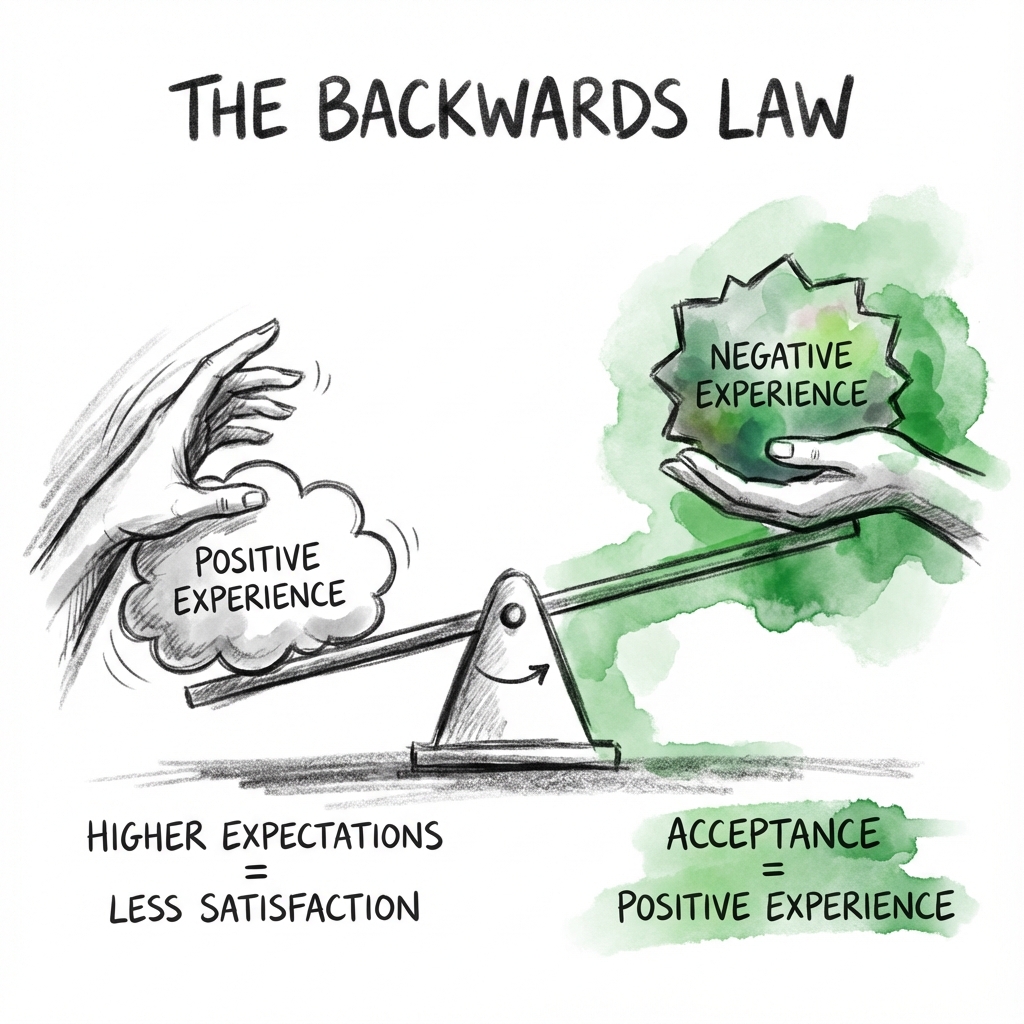
This is a total mind-fuck, so let's break it down.
When you stop giving a fuck, everything seems to fall into place. That’s because the Backwards Law works in reverse.
If pursuing the positive is a negative, then pursuing the negative generates the positive.
- The pain you pursue in the gym results in better health.
- The failures in business lead to a better understanding of success.
- Being open with your insecurities makes you more confident.
Everything worthwhile in life is won through surmounting the associated negative experience.
The avoidance of suffering is a form of suffering. The avoidance of struggle is a struggle.
Happiness Is a Problem
There is a premise that underlies a lot of our assumptions: that happiness is algorithmic.
That it can be worked for, earned, and achieved.
If I achieve X, then I can be happy.
This premise is the problem.
Happiness is not a solvable equation. It is not something that is passively bestowed upon you when you get the promotion or buy the house.
Happiness comes from solving problems. — Mark Manson
The keyword here is solving.
If you avoid your problems, you will make yourself miserable. If you feel like you have problems you can’t solve, you will also be miserable.
The secret sauce is in the solving of the problems, not in the absence of them.
Problems never stop. They merely get exchanged or upgraded.
Warren Buffett has money problems. The drunk hobo has money problems. Buffett just has better money problems than the hobo.
The Feature of Pain
Manson invents a hypothetical superhero: Disappointment Panda.
He would wear a cheesy eye mask and a shirt way too small for his belly. He would go door-to-door telling people harsh truths they need to hear but don't want to accept.
He would ring your doorbell and say:
Sure, making a lot of money makes you feel good, but it won't make your kids love you.
Or:
If you have to ask yourself if you trust your wife, then you probably don't.
Then he’d wish you a nice day and saunter off.
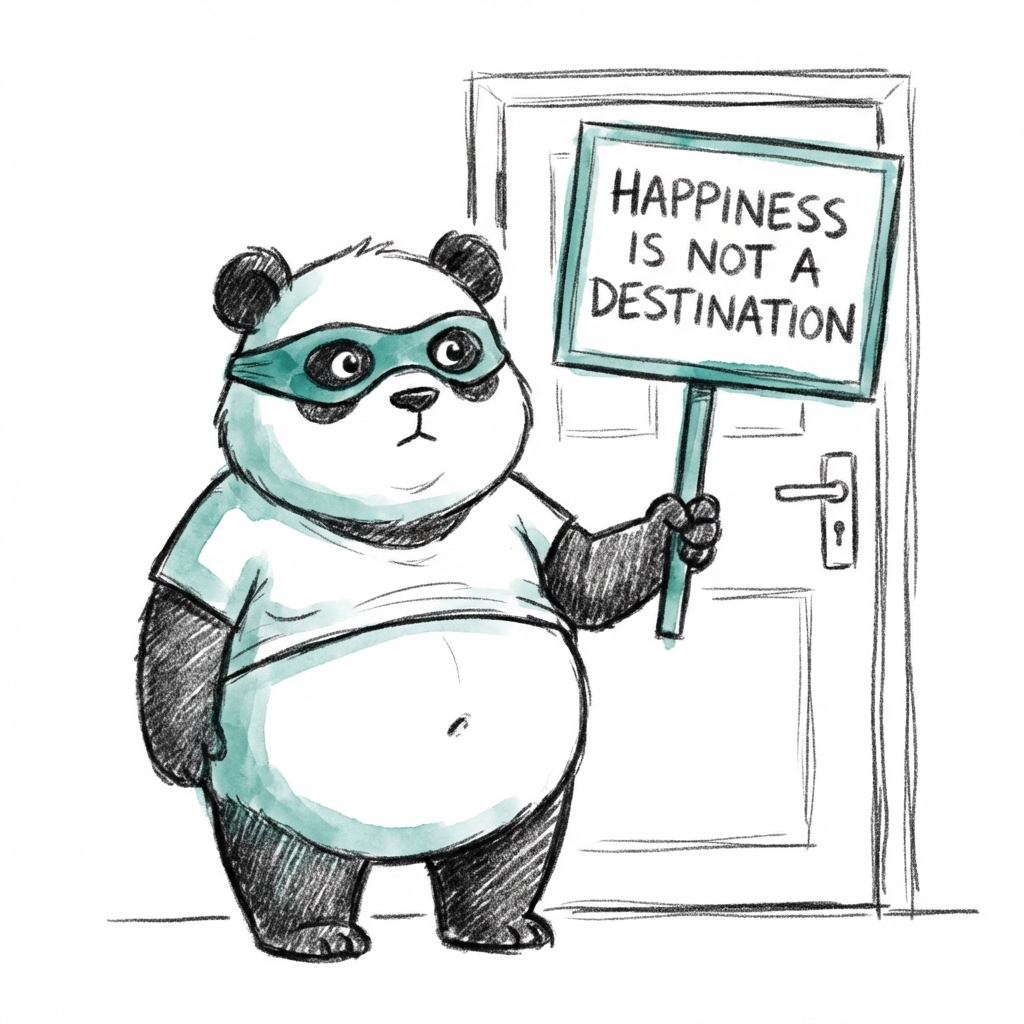
Disappointment Panda would tell you that suffering is biologically useful. It is nature’s preferred agent for inspiring change.
We are wired to become dissatisfied with whatever we have and satisfied only by what we do not have.
Pain is a feature, not a bug.
Choose Your Struggle
If I ask you, "What do you want out of life?" and you say, "I want to be happy and have a great family," your response is so common it doesn't mean anything.
Everybody wants that.
A more interesting question, a question that most people never consider, is this.
- What pain do you want in your life?
- What are you willing to struggle for?
Manson admits that for most of his adolescence, he fantasized about being a rock star. He envisioned himself on stage, the crowd screaming, his fingers shredding a guitar solo.
But he never actually became a rock star.
It took him a long time to figure out why.
He didn't actually want it.
He wanted the reward, but he didn't want the struggle.
He wanted the fame and adulation, but he didn't want the process. He didn't want the daily drudgery of practicing scales, the logistics of bandmates, or the hauling of heavy gear to empty bars.
He was in love with the victory, not the fight.
And life doesn't work that way.
Who you are is defined by what you’re willing to struggle for.
- People who enjoy the gym are the ones who get in shape.
- People who enjoy long workweeks are the ones who become executives.
- People who enjoy the stresses of the starving artist lifestyle are the ones who make it.
This is the most simple and basic component of life.
Our struggles determine our successes.
You cannot have a pain-free life. It can't all be roses and unicorns.
Pleasure is the easy question. The hard question is:
What is the pain that you want to sustain?
Real, lifelong fulfillment has to be earned through the choosing and managing of our struggles.