One night in his twenty-ninth year, Eckhart Tolle woke up in a state of absolute dread.
The silence of the room, the distant noise of a train. Everything felt hostile and meaningless. He had lived with anxiety and suicidal depression for years, but this time was different.
A single thought kept repeating in his mind.
"I cannot live with myself any longer."
What happened next changed everything.
But to understand it, you first need to meet the self Tolle couldn't live with.
Because you have one too.
It's the voice in your head that never stops talking.
It judges the present, regrets the past, and worries about the future.
It tells you you're not good enough, or that you'll be happy only when you get that job, that partner, or that raise.
You might believe this voice is you. You might even think you need it to navigate the world. But Tolle's insight reveals a radical truth.
That voice is not you.
It is a tool that has taken over its master. And it is the root cause of almost all your suffering.
This longform unpacks the core teachings of The Power of Now.
By the end, you will discover:
- Why your mind is a tool that has become the master, and how to disidentify from the constant chattering voice in your head.
- The nature of the Ego and the Pain-Body, and how to dissolve them with the light of presence.
- How to distinguish between Clock Time and Psychological Time to eliminate anxiety and regret.
- Practical portals into the Unmanifested, using silence, space, and nature to anchor yourself in Being.
- The secret to Enlightened Relationships and how to use them as a mirror for spiritual growth.
- The true meaning of Surrender and how to yield to the flow of life without resignation.
The 1-Minute Summary
You are not your mind. You are the conscious presence that witnesses it.
The voice in your head, the constant stream of compulsive thinking, is responsible for most of your suffering.
It traps you in Psychological Time. This is an obsession with the past (regret, guilt) and the future (anxiety, salvation).
True freedom is found only in the Now. The past is a memory. The future is a projection. The present moment is the only thing that ever truly exists.
To find peace, you must follow three steps:
- Disidentify from the mind. Observe your thoughts without judging them.
- Accept the Now. Surrender to the present moment, no matter what it contains.
- Inhabit your Inner Body. Anchor attention in your physical form to stay rooted in presence.
Enlightenment isn't a supernatural achievement. It is simply the felt oneness with Being. This is available to you right now, the moment you stop resisting life.
Module 1
The Trap of the Mind
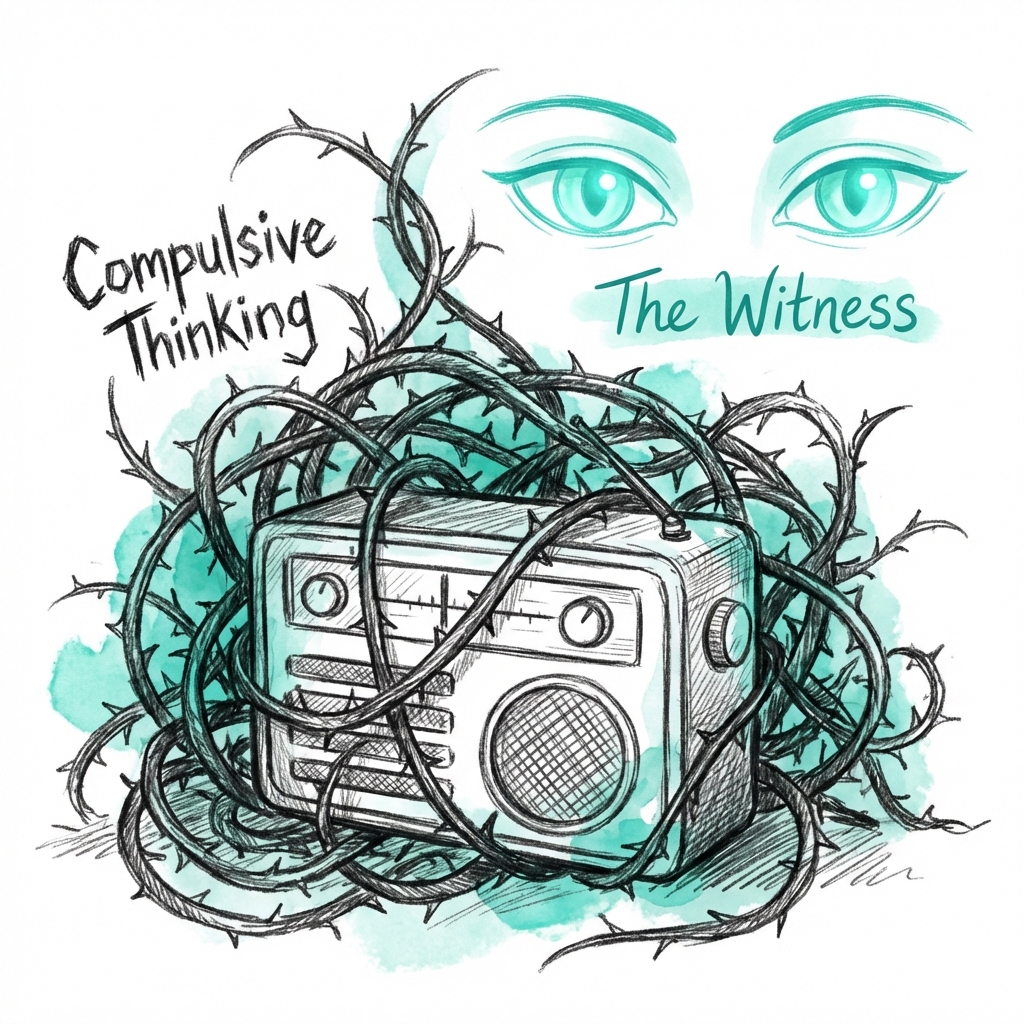
If you saw someone walking down the street muttering to themselves, arguing with invisible enemies, or shouting about the past, you would probably think they were insane.
But the truth is, you do the exact same thing.
The only difference is that you don't do it out loud.
This unceasing mental noise is the human condition. We are trapped in Compulsive Thinking. We don't use our minds. Our minds use us.
We have mistaken the tool for the master.
The Voice in the Head
For most people, thinking is not a choice.
It's a disease.
It happens to you, just as digestion happens to you.
You interpret the present moment through the lens of the past or the future. This creates an opaque screen of concepts, labels, and judgments that stands between you and reality. You never touch the world directly. You only touch your mental interpretation of it.
This separation creates a sense of isolation.
Me against the world.
It creates a deep-seated unhappiness.
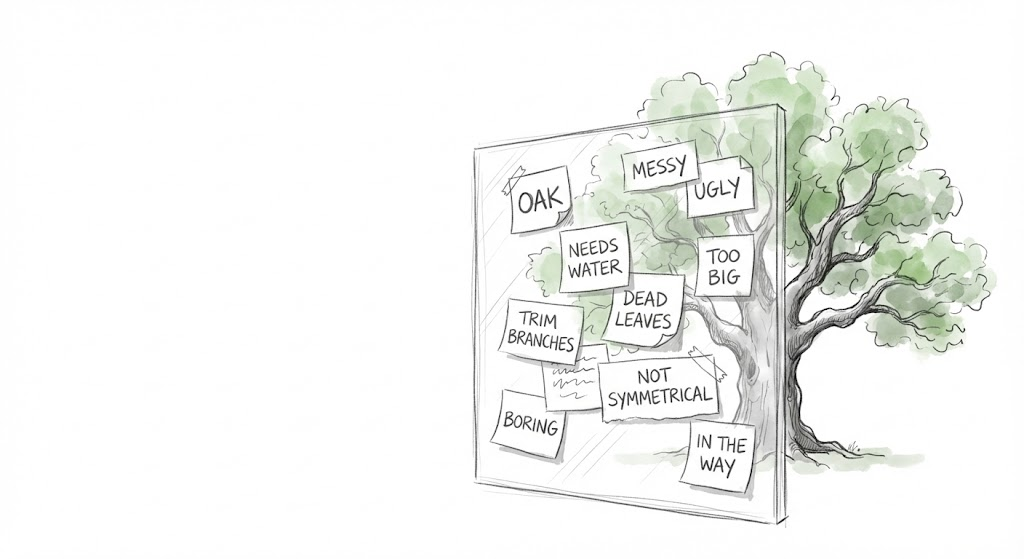
To break free, you don't need to stop thinking forever.
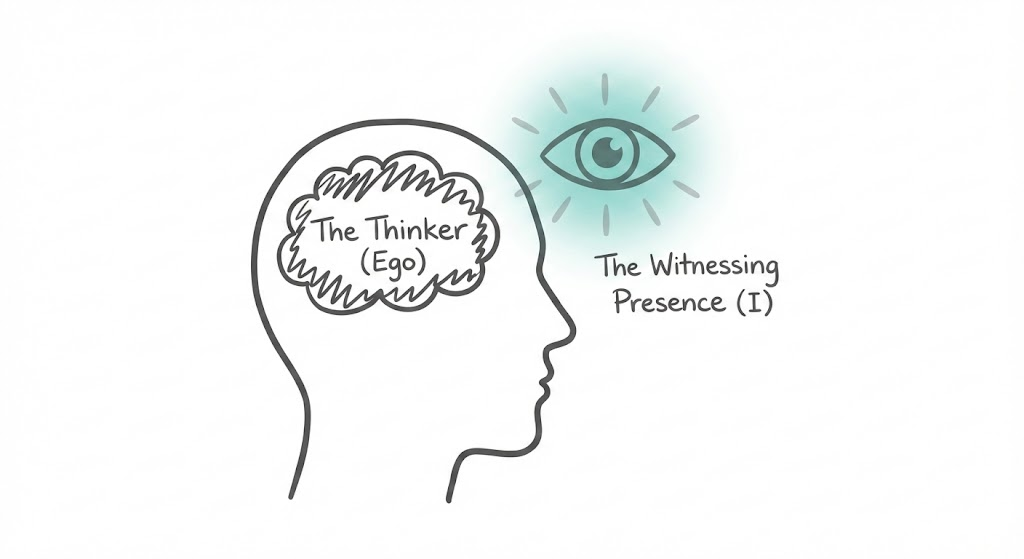
You just need to realize that you are not the thinker. You are the listener.
Try this.
Close your eyes and ask yourself, "I wonder what my next thought will be." Then wait like a cat watching a mouse hole.
You will notice that as long as you are intensely alert and waiting, the mind is silent.
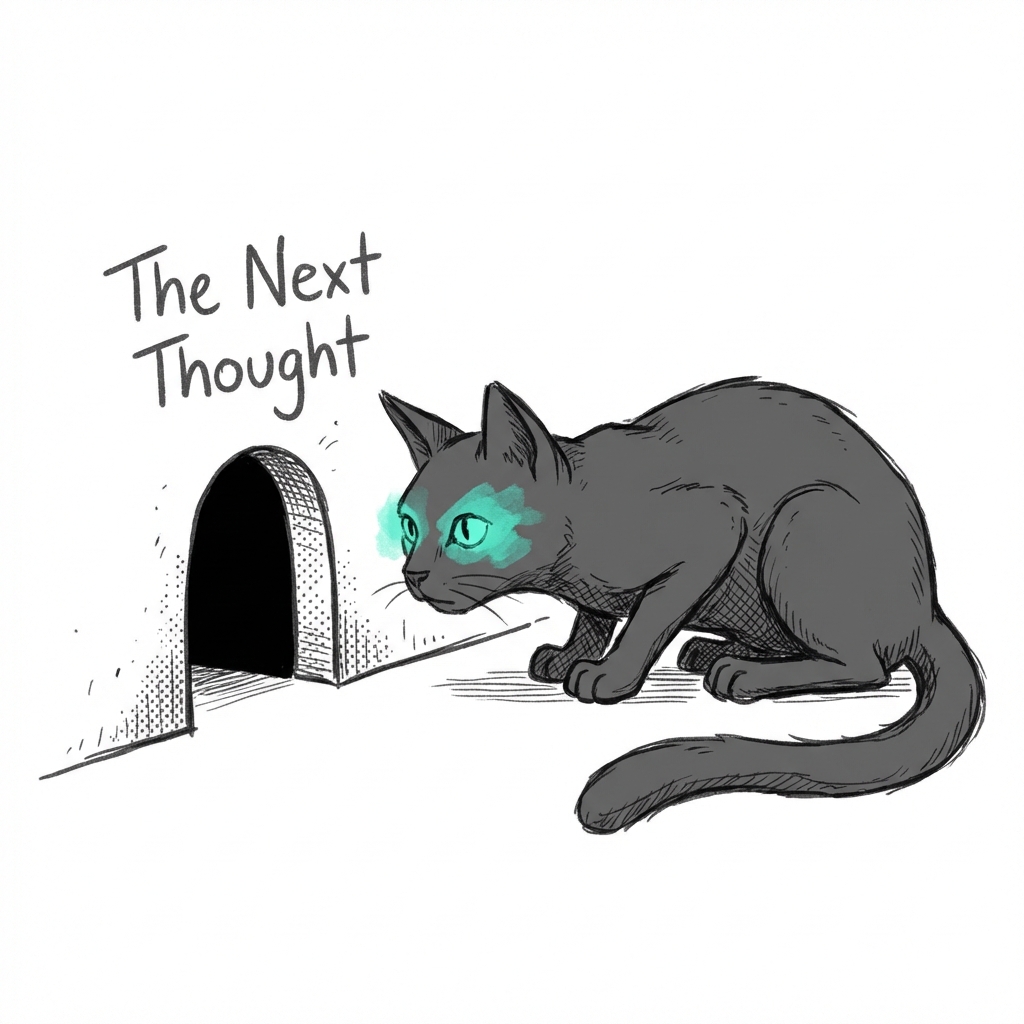
Presence arises where thought subsides.
The False Self (Ego)
When you identify with your mind, you create a phantom self.
The Ego.
The ego has no existence of its own.
It is a mental image of who you are, built entirely on your personal history (past) and your desires (future).
Because the ego is an illusion, it feels constantly threatened.
It is terrified of death and annihilation.
To survive, the ego seeks external validation.
It craves possessions, status, righteousness, and superiority to feel real. But no amount of external gratification can satisfy it.
You can't satisfy a ghost.
The ego's mantra is always a question. "Is there more?"
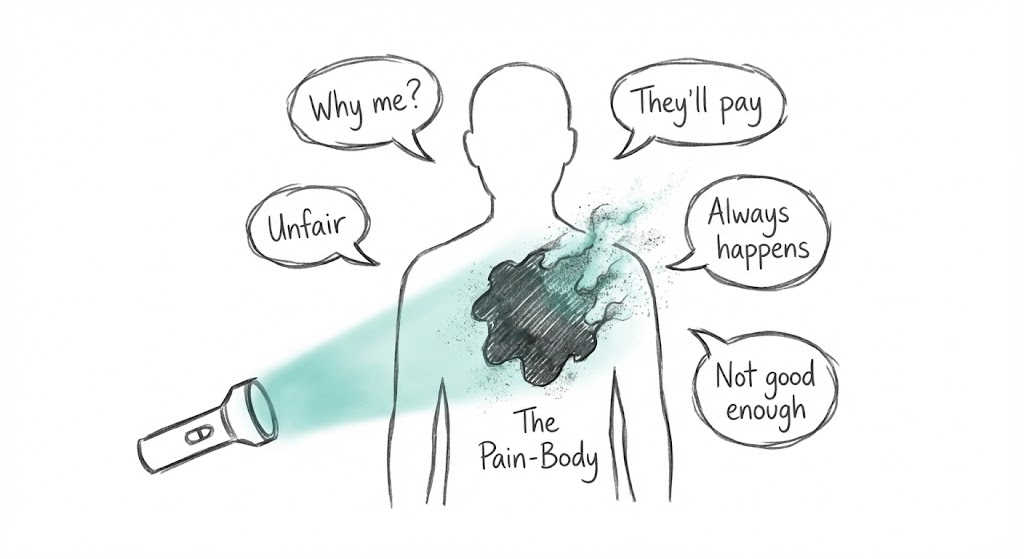
The Pain-Body
The ego doesn't just live in your head. It lives in your body.
Tolle calls this the Pain-Body.
The pain-body is the accumulated residue of all the emotional pain you have ever suffered.
It is a negative energy field that occupies your body and mind.
For some, it is dormant most of the time.
For others, it is active up to 100% of the time.
The pain-body is like a psychic parasite. It feeds on negative emotions. When it wakes up, triggered by a stray comment, a thought, or a situation, it takes over your mind.
You become irritable, angry, or deeply depressed.
You want to be unhappy.
The pain-body wants to survive, just like every other entity in existence, and it can only survive if it gets you to unconsciously identify with it. — Eckhart Tolle
The pain-body fears the light of your consciousness.
It thrives in the dark, unobserved corners of your mind.
The moment you shine the light of presence on it, by simply observing the feeling of pain without judging it or trying to fix it, it loses its power to control your thinking.
You break the cycle. You stop feeding the beast.
The Pain-Body in Action
Imagine you are at a family dinner.
The conversation is pleasant. Then your mother makes an innocent comment about your job. "So, any promotions coming up?"
Suddenly, a wave of irritation rises in your chest. Your jaw tightens. A voice in your head starts narrating: She always does this. She never thinks I'm good enough. Why can't she just be supportive?
Within seconds, you snap back with a sarcastic reply. Your mother looks hurt. Your father tells you to calm down. Now you're defensive. The dinner is ruined.
What happened?
Your pain-body woke up.
The innocent comment was not the cause. It was the trigger. Somewhere in your past, you accumulated pain around the feeling of not being good enough. That old wound was dormant, waiting for the right stimulus.
The moment it activated, it hijacked your perception. It filtered your mother's question through the lens of old pain. It made you see an attack where there was only curiosity.
This is the mechanism:
- Trigger: An external event (a comment, a look, a situation).
- Activation: The pain-body wakes up and floods your system with negative emotion.
- Identification: You believe the emotion is you. You believe the thoughts are true.
- Reaction: You act from the pain-body, saying or doing things that create more pain.
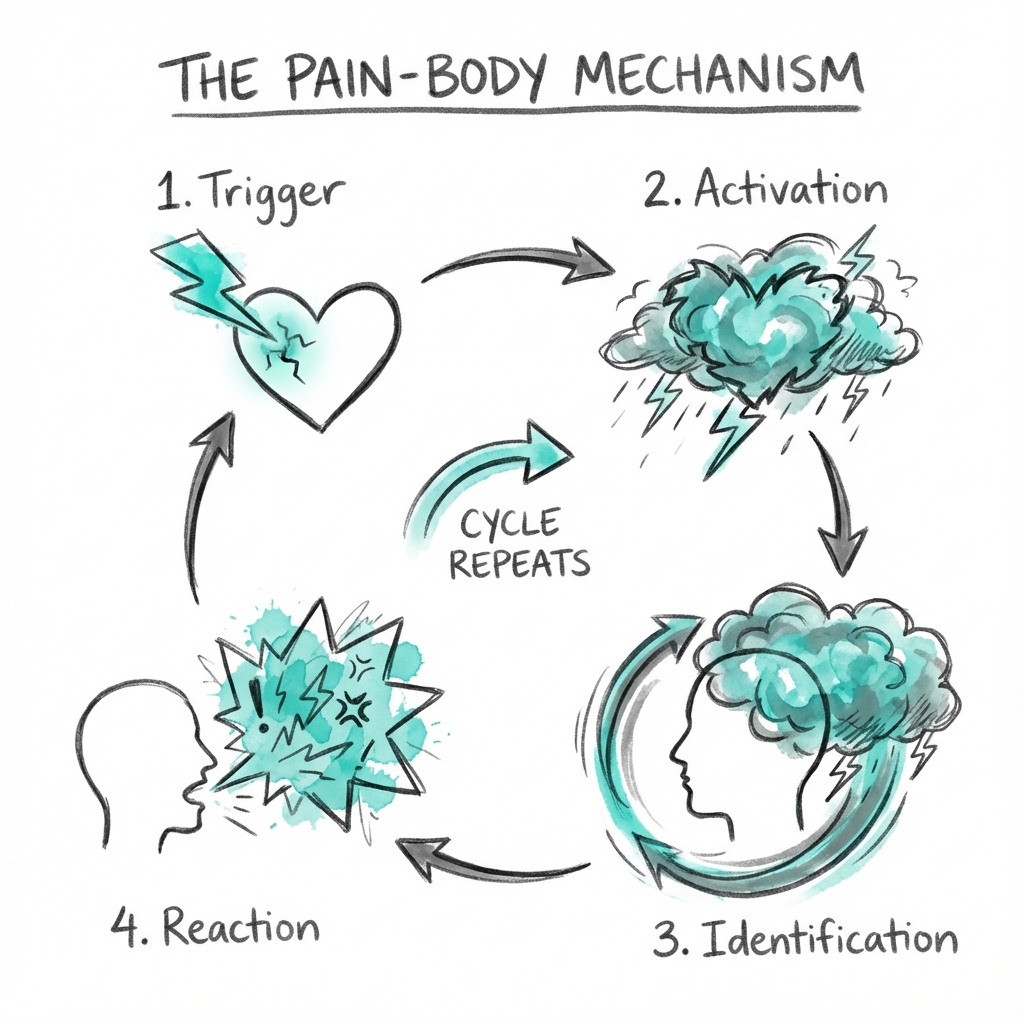
The exit is always the same. The moment you recognize what is happening, you break the chain. You step back and observe the rising emotion without acting on it.
You say to yourself: "This is old pain. It is not the situation. It is not me."
In that moment of recognition, you are no longer possessed. You are present.
But how do you know when your pain-body is active?
There are clear signs.
You suddenly feel a shift in mood that seems disproportionate to what just happened. Someone makes an innocent comment, and you feel a wave of irritation or sadness wash over you. Your thinking becomes negative, repetitive, and accusatory. You may feel a heaviness in your chest or stomach.
The pain-body also loves drama. It feeds on conflict.
Have you ever noticed how some arguments seem to take on a life of their own?
You find yourself saying things you don't mean, escalating when you know you should stop. That is the pain-body using your voice. It also feeds on the pain-bodies of others.
Two activated pain-bodies in the same room will find each other.
They will provoke each other, create conflict, and feast on the negative energy they generate together.
This is why some relationships become cycles of fighting and making up. Both partners are unconsciously addicted to the drama.
The key is to catch it early.
The moment you notice the shift, the moment you feel the familiar heaviness or the urge to attack, pause. Take a breath. Say to yourself: "This is the pain-body."
That simple act of recognition breaks its spell.