It was a quiet Sunday morning on a New York City subway.
People were sitting peacefully. Some reading newspapers. Some lost in thought. Some resting with their eyes closed. It was a calm, serene scene.
Then a man and his children entered the subway car.
The children were loud and rambunctious. Instantly the climate changed. They were yelling back and forth, throwing things, even grabbing people’s papers. It was disturbing.
And yet, the man sitting next to Stephen Covey did nothing.
He sat with his eyes closed, oblivious to the situation. It was difficult not to feel irritated. How could he be insensitive as to let his children run wild and take no responsibility?
Finally, with patience and restraint, Covey turned to him and said, "Sir, your children are disturbing a lot of people. I wonder if you couldn’t control them more?"
The man lifted his gaze as if coming to consciousness for the first time. He said softly:
Oh, you’re right. I guess I should do something about it. We just came from the hospital where their mother died about an hour ago. I don’t know what to think, and I guess they don’t know how to handle it either.
Can you imagine what Covey felt at that moment?
His irritation vanished. He didn't have to worry about controlling his attitude or his behavior. His heart was filled with the man's pain. Feelings of sympathy and compassion flowed freely.
Your wife just died? Oh, I'm sorry! Can you tell me about it? What can I do to help?
Everything changed in an instant.
What Covey experienced was a Paradigm Shift.
He saw the situation differently. And because he saw it differently, he thought differently, felt differently, and behaved differently.
Most people hack at the leaves of attitude and behavior. We try to force smiles, work harder, and play the part. But we never strike at the root. The problem is the way we see the world.
Here is what most self-help misses:
Real change comes from changing the lens through which you see reality. If your paradigm is distorted, working harder only gets you to the wrong destination faster.
Our culture is obsessed with the Personality Ethic. We look for the quick fix, the life hack, and the "social aspirin" to treat acute pain.
But effectiveness is not a function of personality tricks. It is a function of character.
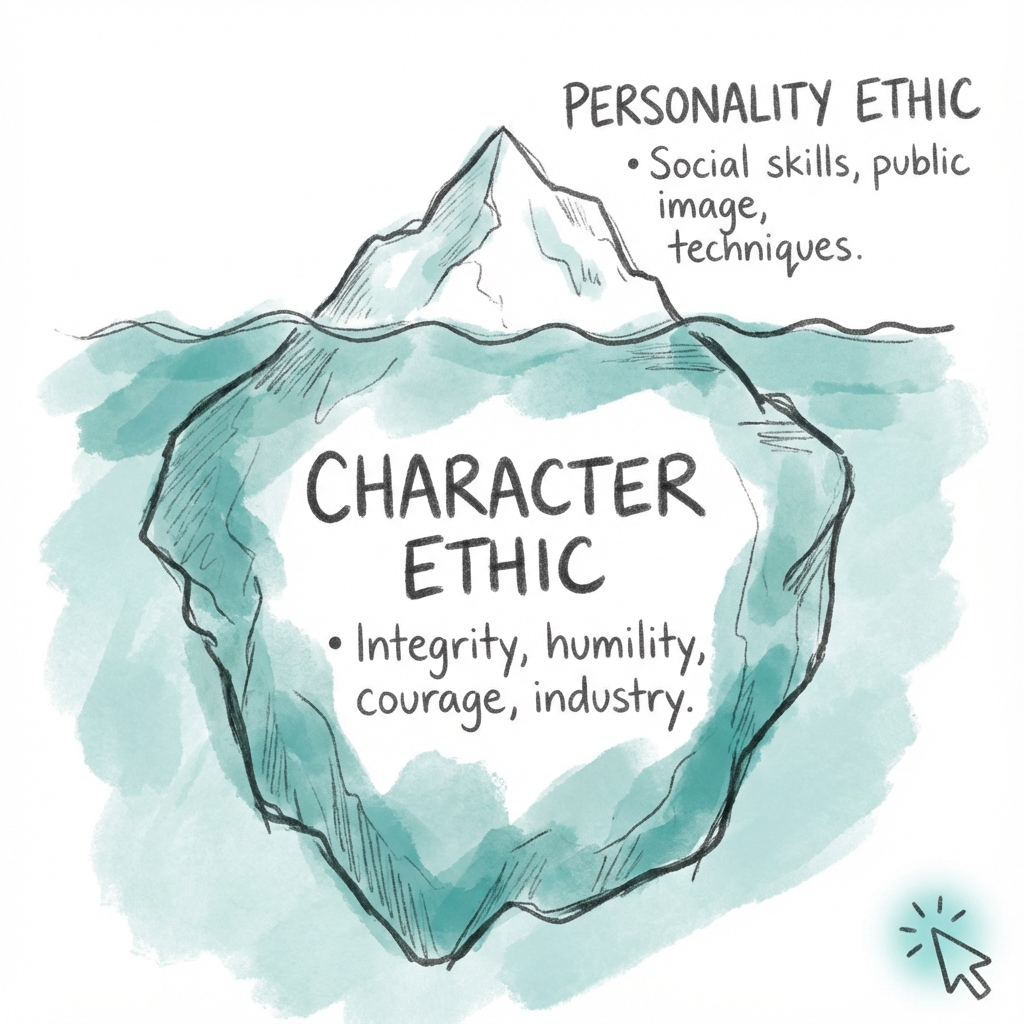
The Inside-Out approach starts at the root. It focuses on your paradigms, character, and motives.
To have a happy marriage, you must be the kind of person who generates positive energy. To be trusted, you must be trustworthy.
You cannot talk your way out of a problem you behaved your way into. – Stephen Covey
By the end, you will discover:
- Why private victories must precede public victories.
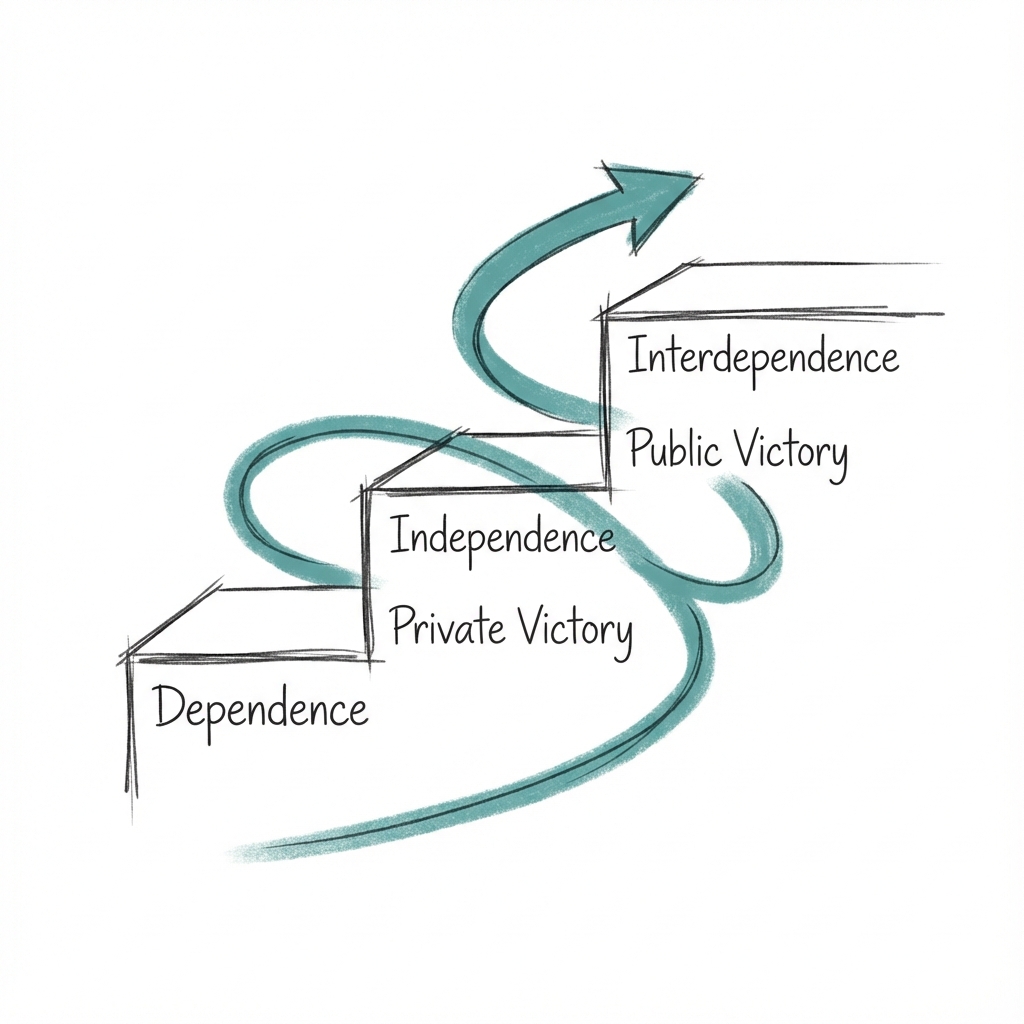
- How the Maturity Continuum moves you from dependence to independence.
- Why most people are addicted to urgency and how Quadrant II thinking breaks the cycle.
- How to build an Emotional Bank Account to make difficult conversations effortless.
- Why Win/Win isn't about compromise, but structural abundance.
- The renewable resource that determines all other capacity.
The 1-Minute Summary
True effectiveness is based on the Character Ethic, not the Personality Ethic. It requires aligning your life with unchanging principles.
The P/PC Balance
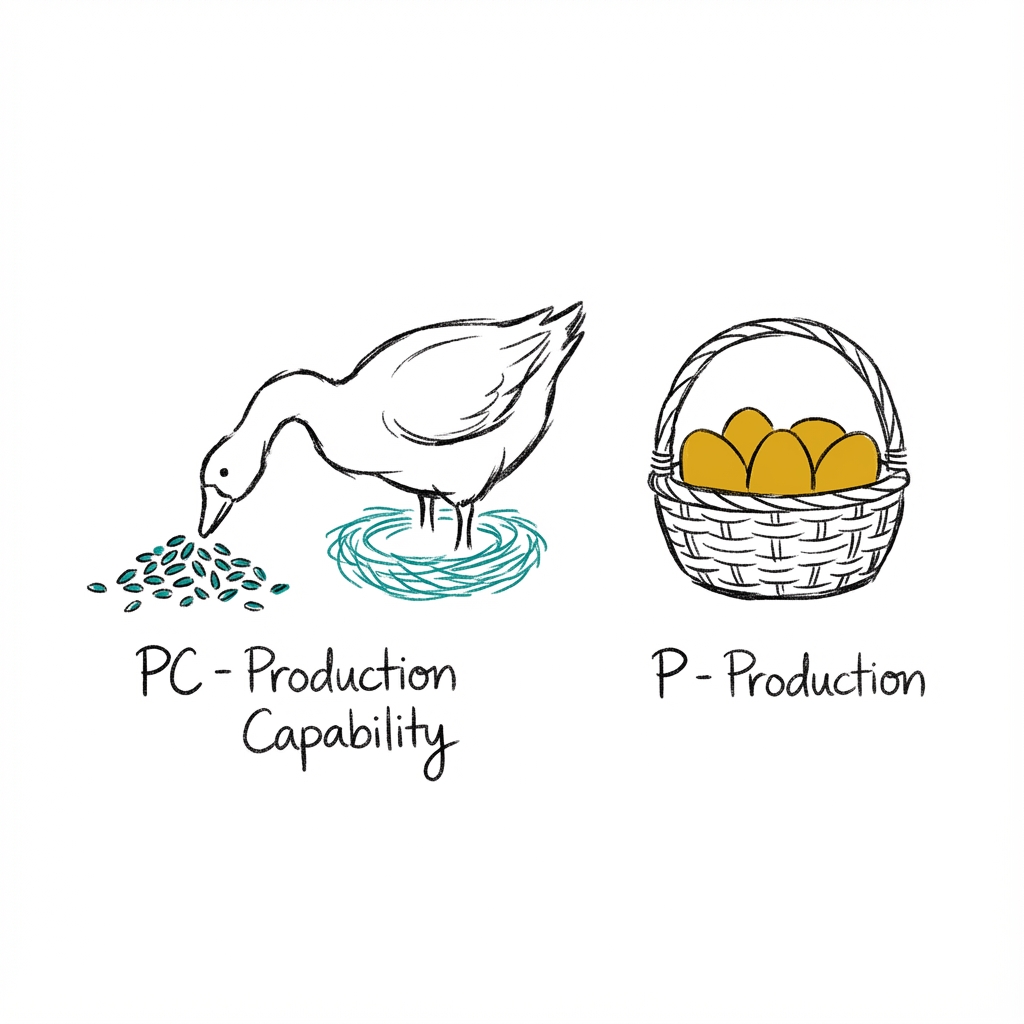
Effectiveness lies in balancing Production (P), or the desired results (golden eggs), and Production Capability (PC), which is maintaining the asset that produces the results (the goose). If you focus only on the eggs, you kill the goose.
The 7 Habits move you along a Maturity Continuum:
- Dependence: (You take care of me).
- Independence: (I can do it). Achieved through Habits 1–3 (Private Victory).
- Interdependence: (We can do it). Achieved through Habits 4–6 (Public Victory).
The Framework
- Be Proactive: You are responsible for your choices.
- Begin with the End in Mind: Define your mission and goals.
- Put First Things First: Prioritize the important, not the urgent.
- Think Win/Win: Seek mutual benefit.
- Seek First to Understand: Listen with empathy before prescribing.
- Synergize: Create solutions better than either party could alone.
- Sharpen the Saw: Continuous renewal.
Module 1
Paradigms and Principles
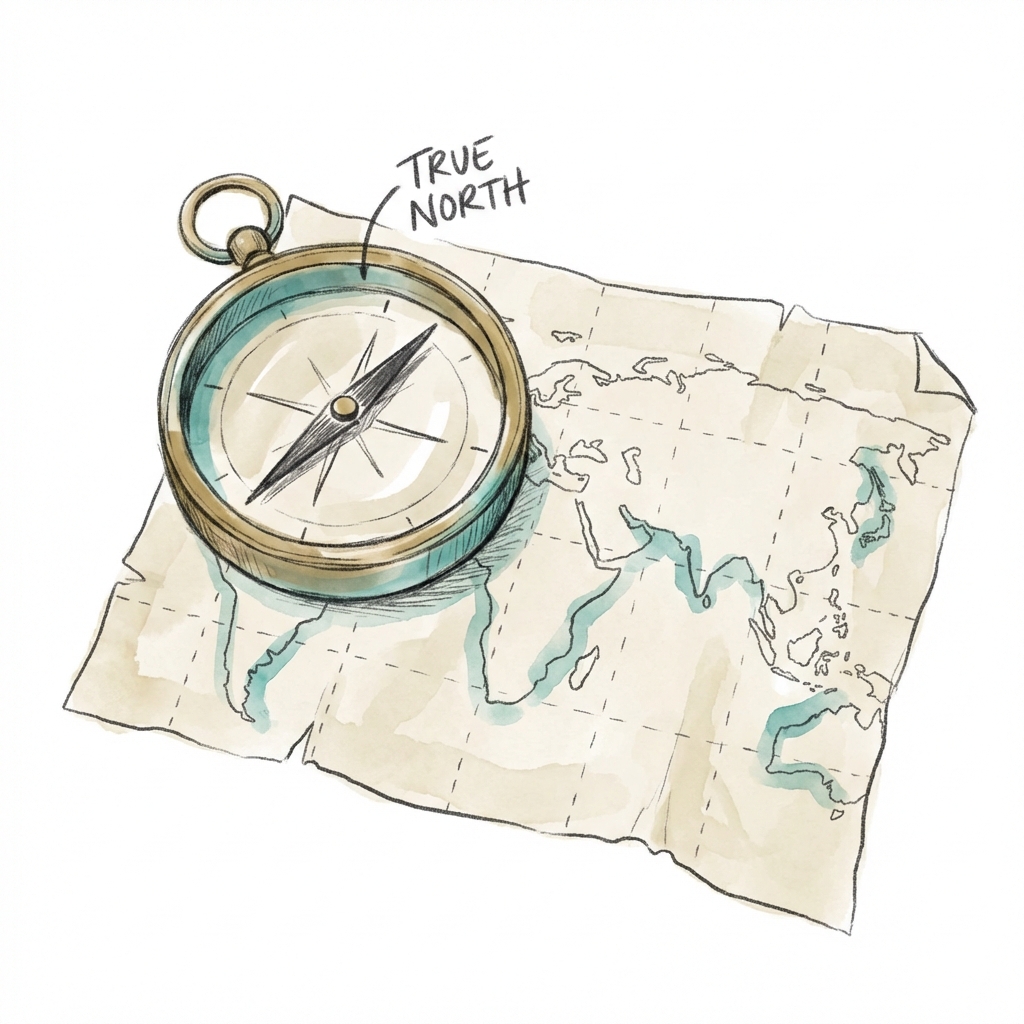
Suppose you wanted to arrive at a specific location in central Chicago. A street map of the city would be a great help to you.
But suppose you were given the wrong map. Through a printing error, the map labeled "Chicago" was actually a map of Detroit.
Can you imagine the frustration?
You might work on your behavior. You could try harder, be more diligent, drive faster. But your efforts would only succeed in getting you to the wrong place faster.
You might work on your attitude. You could think more positively. You still wouldn't get to the right place, but perhaps you wouldn't care. Your attitude would be positive, you'd be happy wherever you were.
The point is, you’d still be lost.
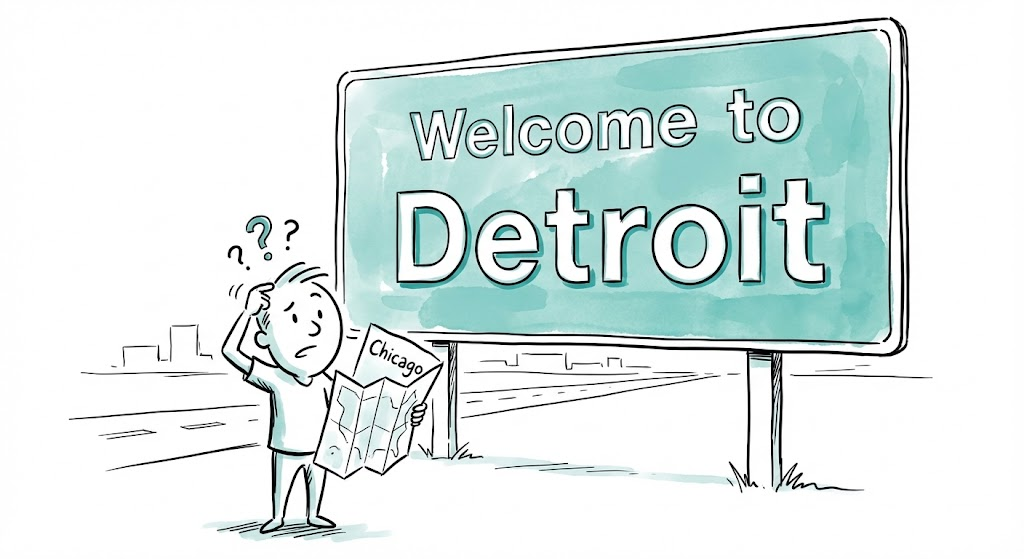
The fundamental problem has nothing to do with your behavior or your attitude. It has everything to do with having a wrong map.
1. The Map is Not the Territory
A paradigm is a map. It is not the territory itself. It is an explanation or model of the territory.
We all carry maps in our heads. We have maps of the way things are (realities) and maps of the way things should be (values). We seldom question their accuracy. We usually aren't even aware we have them. We simply assume that the way we see things is the way they are.
But as the subway experience demonstrated, our maps can be woefully inaccurate.
If your paradigm is that people are lazy, you will manage them like machines. When they resist, you interpret that as proof.
Work on attitude to make small changes. Work on basic paradigms to make quantum leaps.
2. The P/PC Balance
There is one paradigm that governs all effectiveness. It is best understood through the fable of the Goose and the Golden Egg.
A poor farmer discovers a goose that lays a solid gold egg every day. He becomes fabulously wealthy. But with wealth comes greed and impatience. Unable to wait day after day for the eggs, he decides to kill the goose and get them all at once.
But when he opens the goose, he finds it empty. There are no golden eggs, and now there is no way to get any more.
He destroyed the asset that produced the result.
Most people see effectiveness as the golden egg. The more you produce, the more effective you are.
But true effectiveness is a balance of two things:
- Production (P): The desired results (the golden eggs).
- Production Capability (PC): The ability or asset that produces the golden eggs (the goose).
If you buy a car and drive it into the ground, never changing the oil (ignoring PC) to save time and money (maximizing P), you will eventually lose the car.
If you push your employees relentlessly for short-term numbers (P) without investing in their training or well-being (PC), you burn them out and lose the asset.
Effectiveness lies in the balance. You must feed the goose.
3. The Maturity Continuum
The 7 Habits are not a random list of good ideas. They are a sequential path of growth that moves you from Dependence to Independence to Interdependence.
- Dependence: The paradigm of You. You take care of me. You are responsible for my happiness. If you fail, I blame you.
- Independence: The paradigm of I. I can do it. I am responsible. I can choose. This is the goal of most self-help literature, but it is not the ultimate goal.
- Interdependence: The paradigm of We. We can do it. We can cooperate. We can create something greater together than we could alone.
A dependent person blames their spouse for their unhappiness.
An independent person takes responsibility for their own emotions.
An interdependent person builds a relationship where both partners lift each other.
You cannot jump straight to interdependence. You cannot have a successful marriage if you lack control over your own emotions. You cannot lead a team if you still blame others for your problems.
Private victories must precede public victories. You must learn to walk before you can run.
It begins with the first and most fundamental habit. You must realize that you are the programmer.